
The North American mining industry is currently amid a safety renaissance driven by better brains, that is, digital ones. Find out how in this second part of a two-part series from ViAct’s Gary Ng.
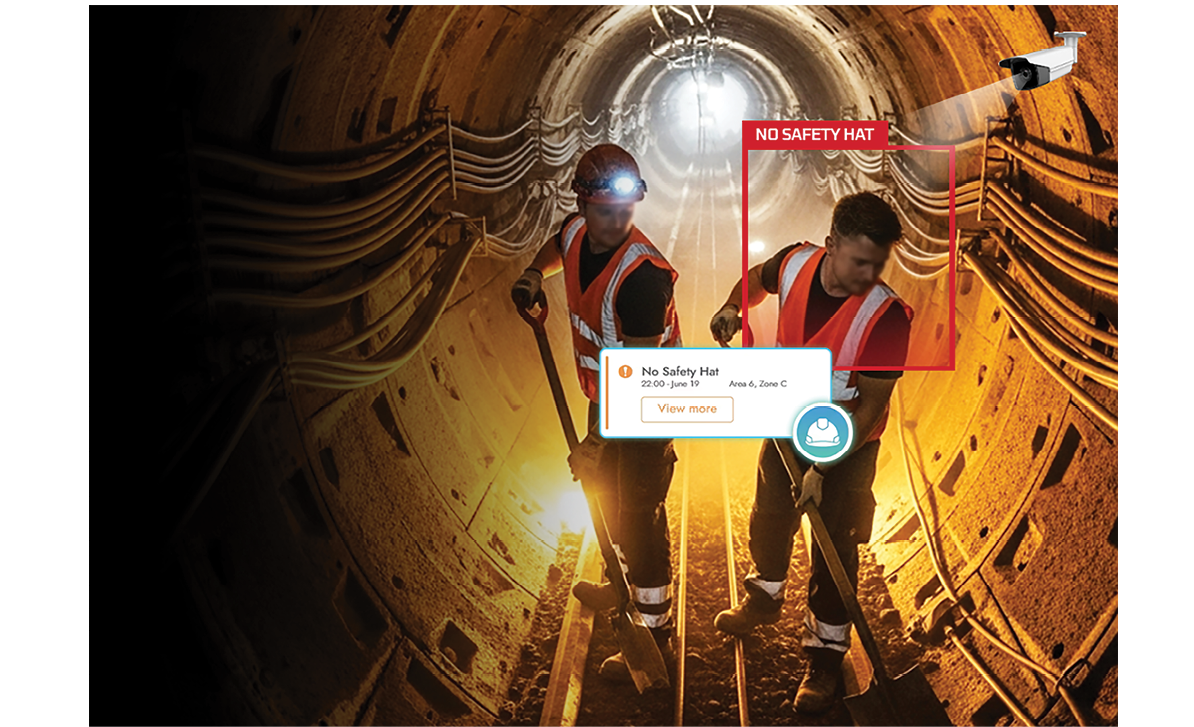
Mines have always spoken – through rumbling ground, shifting air, or the sudden silence that signals something has gone wrong. The question is: who listens? From Alberta’s oil sands to Nevada’s open pits, the answer is increasingly not a person, but a system: one that sees, thinks, and acts faster than human reflexes can. Video analytics are emerging as the new backbone of mining safety, continuously monitoring operations and discerning what should not be happening. In an age when downtime can cost millions and near-misses can escalate within seconds, this layer of intelligence offers a new kind of situational awareness.
THE HUMAN STAKES BENEATH THE SURFACE
The mines tell a different story beneath the protective helmets. Safety statistics reveal that mining remains one of the most dangerous industries in North America. In the US metal and non-metal mining sector alone, fatalities increased from 13 to 19 within a year to 2024, pushing the fatal injury rate to 0.0091 per 200,000 hours worked.
That is just a part of the picture. In 2023, the industry recorded 40 mining deaths: the highest total since 2014. Of these, 16 involved machinery and 10 involved powered haulage, together accounting for 65% of all fatalities.
Behind each statistic, there is a story: a missed signal, a fatigued or distracted operator, a blind spot that caught everyone off guard. In such an environment, a momentary lapse can spiral into irreversible consequences. Something as mundane as a missed intervention or unnoticed micro-sleep can lead to regulatory fines, reputational damage, ESG setbacks, or, most devastatingly, a life altered.
Yet, it is often what safety systems miss that proves most dangerous. A Caterpillar Global Mining study revealed that fatigue plays a role in 65% of haul-truck incidents. Adding in low visibility, blind spots, and high-noise environments, even experienced workers can make dangerous mistakes. In response, there is a growing focus on proactive safety, evident in MSHA regulations and provincial safety codes in Canada.
VIDEO ANALYTICS AS THE MISSING LINK
For decades, mining safety has leaned on a standard toolkit: static CCTV, scheduled walkthroughs, and the trained eyes of supervisors. These setups may record incidents, but they rarely prevent them. The problem is fragmentation. Footage lives in silos, insights come too late, and human oversight cannot match the complexity of today’s operations. Simply put, traditional systems offer hindsight, not foresight. What is missing is the element that ties it all together in real-time. That is where video analytics step in.
By layering AI onto existing video feeds, video analytics systems can be taught to understand what is happening and identify risks in real time.
A standard camera might show a haul truck reversing, but video analytics flags when it does so in a high-risk zone without a spotter. It recognizes patterns, detects unsafe behaviors, and flags anomalies before they escalate. That means a worker stepping too close to a moving loader does not become another statistic; it becomes an alert.
This technology also connects with wider operational systems – from digital permits and access control to open edge detection and fatigue monitoring. It turns standalone cameras into dynamic sensors that talk to the broader safety ecosystem. Thus, video analytics understand why what happens matters.
REIMAGINING SITUATIONAL AWARENESS WITH VIDEO ANALYTICS
Imagine this: A worker begins their shift in a remote zone underground. Minutes later, their motion patterns stop registering – no movement, no response. Traditional systems might flag this irregularity hours late, but with video analytics in play, the system detects it in real-time and triggers an alert. A nearby crew is notified, and timely intervention prevents what could’ve become a critical incident. This is the difference real-time context can make. Video analytics solutions transform ordinary cameras into intelligent observers, tracking not just presence, but behavior, context, and risk evolution.
We believe safety should begin the moment risk emerges. Video analytics gives frontline teams the time and clarity they need to act before danger strikes. When real-time understanding replaces reactive response, safety becomes proactive by design.
WHAT’S NEXT: AUTONOMOUS SAFETY?
The future of mining safety is anticipatory. With advancements in video analytics, we are entering an era of autonomous safety, where behavioral patterns shape predictive alerts, and interventions are triggered before risks fully materialize. But what is next is even more powerful: systems that not only alert but anticipate, learning from every frame to build a predictive safety blueprint. Tomorrow’s HSE strategies will be driven less by compliance checklists and more by continuous, AI-powered situational awareness. In North America’s mining landscape, autonomous safety is rapidly becoming the new operational norm.

About the author: Gary Ng is CEO and co-founder of viAct.